Les Terribles
32nd Infantry Division
- Added: October 7, 2026
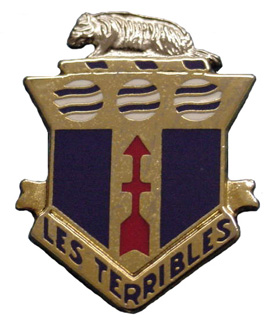


Les Terribles is the famous nickname given to the 32nd Infantry Division (which included the 128th Infantry Regiment) during World War I.
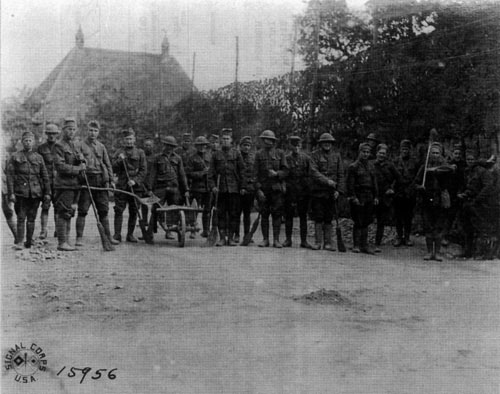
Les Terribles is the famous nickname given to the 32nd Infantry Division (which included the 128th Infantry Regiment) during World War I.
Origin of the Nickname
French Commander: French General De Mondesir, commander of the 38th French Corps, gave the unit the name after watching them fight.
The Reaction: After observing the American soldiers display fierce determination and capture tough positions along the Vesle River and around Bellevue Farm, he exclaimed, “Oui, Oui, Les soldats terribles, très bien, très bien” (Yes, Yes, the terrible soldiers. Very good. Very good.).
Meaning: “Les Terribles” translates to “The Terrible Ones” or “The Fierce Ones,” recognizing their unmatched grit and ability to advance over terrain and through defenses others could not.
Unit Background
Composition: Formed in July 1917 from National Guard units representing Wisconsin and Michigan.
Key Campaigns: The 128th Infantry Regiment and the 32nd Division fought in major Western Front campaigns including Alsace, Aisne-Marne, Oise-Aisne, and Meuse-Argonne.
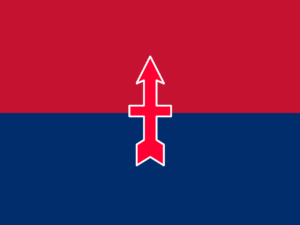
The Red Arrow: Because they persistently pierced through every German defense line—most notably the famed Hindenburg Line—they also earned the nickname the Red Arrow Division, adopting a red arrow piercing a line as their official shoulder insignia.
During the crucible of World War I, the United States Army’s 32nd Infantry Division forged a legendary reputation that earned them a terrifying moniker from their German adversaries: Les Terribles—The Terribles. Composed primarily of National Guard units from Wisconsin and Michigan, the division arrived on the Western Front in early 1918 as a patchwork of citizen-soldiers, but quickly transformed into one of the American Expeditionary Forces’ most formidable and relentless combat formations. Their combat debut came in the fierce fighting around Alsace, but it was during the Aisne-Marne Offensive in July and August 1918 that they truly earned their nickname. Spearheading the assault to capture the heavily fortified heights of Plateau surmounted by the village of Fismes and driving through the Ourcq River sector, the 32nd Division displayed an aggressive tenacity and willingness to press the attack against heavily entrenched German positions that left enemy commanders stunned. Captured German intelligence reports frequently singled out the unit, referring to them as “Die Schrecklichen”—the German equivalent of “The Terribles”—in acknowledgment of their ferocious fighting spirit.
The division’s combat pedigree only grew during the grueling Meuse-Argonne Offensive later that year, where they successfully pierced the formidable Kriemhilde Stellung, a key anchor of the German Hindenburg Line. Operating with relentless drive, Les Terribles suffered devastating casualties—losing thousands of men killed and wounded—yet they never failed to achieve an objective or yield captured ground. By the time the armistice was signed on November 11, 1918, the 32nd Division had fought in three major offensives, driven the enemy back across thirty kilometers of heavily defended French terrain, and earned a place in military lore as the very embodiment of American fighting resolve in the Great War.